The median SDR quota is 10 held meetings a month. Whether that’s good depends on what counts as a meeting, who you sell to and how big your market is.
Short answer: the benchmark is about 10 held first meetings per SDR per month. The Bridge Group’s 2025 study of 351 B2B companies puts the median monthly quota at 10. That figure is 16 where an introductory call counts and 9 where the meeting has to be fully qualified. Only 60 percent of SDRs reached their quota. For an in-house SDR, plan for fewer qualified meetings than their quota. Specialist phone-first BDRs can go well beyond the benchmark. Our top-performing BDRs at Noord50 book 40 qualified meetings a month, about two a day. Whatever number you see, check how a meeting is defined and how many actually took place.
This article explains where those numbers come from, what moves them up or down, and how to work out the capacity you actually need. We book qualified B2B meetings by phone across more than 20 European countries, and the same questions come up in every planning conversation.
The benchmark: 10 held meetings a month
The most-cited source on SDR output is The Bridge Group’s Sales Development Models, Metrics & Compensation report. Its tenth edition, published in February 2025, covers 351 B2B companies. The monthly quota for held first meetings depends heavily on how strictly a meeting is defined:
| What counts as a meeting | Median monthly quota per SDR |
|---|---|
| Introductory meeting | 16 |
| Semi-qualified meeting | 10.4 |
| Fully qualified meeting | 9 |
| All companies (median) | 10 |
| Converted to a first-stage opportunity | 6 |
Three more findings from the same report put these figures in context:
- The median quota has fallen by 40 percent since 2018, so older rules of thumb of 15 or more meetings a month overstate what’s normal today.
- Only 60 percent of SDRs were at quota, the lowest share in the study’s history.
- Average ramp time was 3.0 months.
Keep in mind that 78 percent of the respondents are based in North America, and the figures are quotas, not results. It’s a useful anchor, but your own number depends on the factors below.
Why top BDRs can book 40 meetings a month
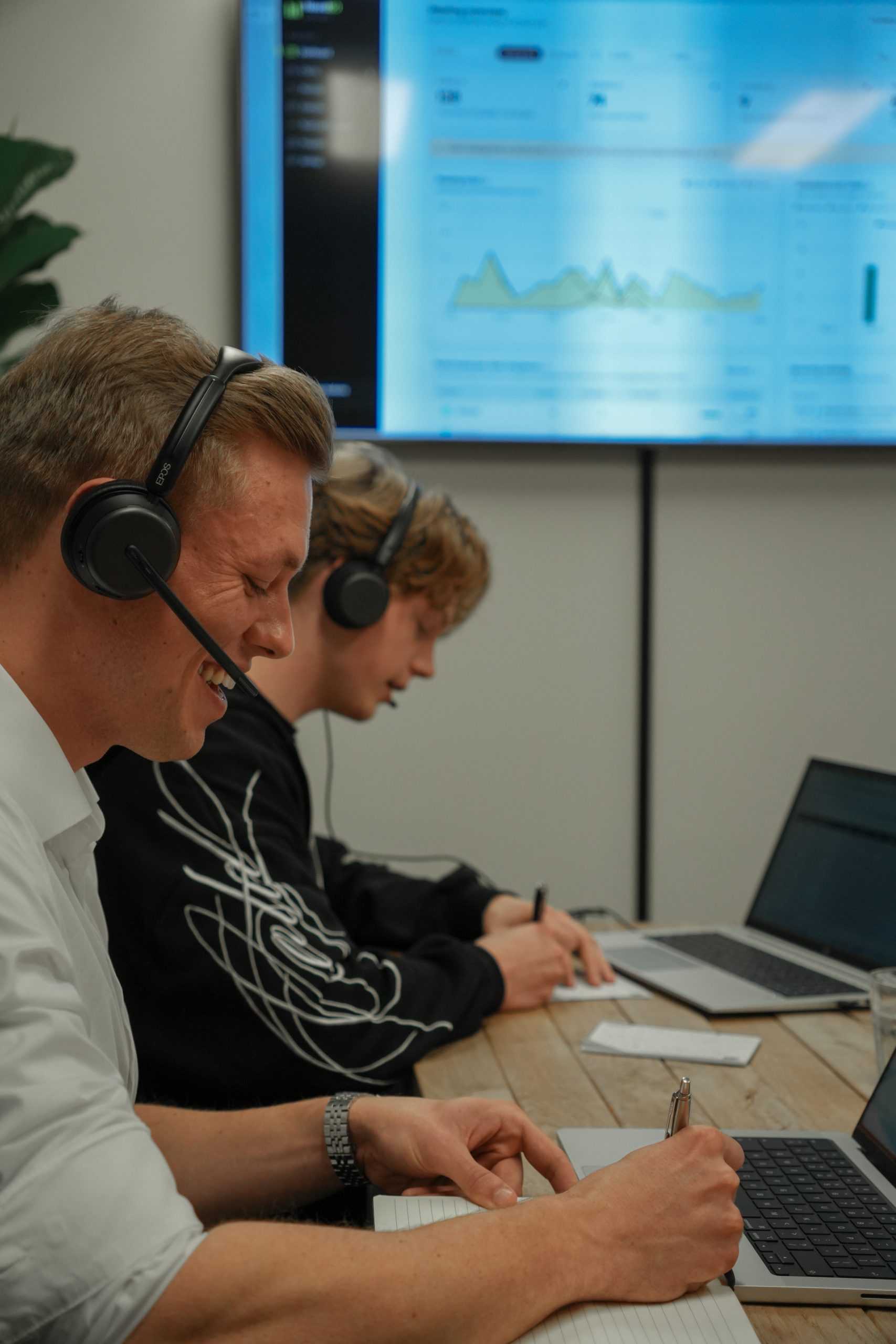
Our top-performing BDRs book 40 qualified meetings a month, about two a day. That is four times the benchmark median, and it doesn’t make the benchmark wrong. It comes down to how the work is set up. We give our BDRs great data (here is how we think about finding mobile numbers) and take everything else off their plate, so they can spend their time dialing and doing what they do best. The two numbers describe different jobs:
- Time on the phone. In many in-house teams, SDRs also research accounts, build lists, handle inbound leads and attend internal meetings. A BDR whose list, data and pitch are prepared before the campaign starts spends far more of the day in live conversations.
- Phone first. Two qualified meetings a day takes many more conversations than the benchmark’s 4.6 a day, a higher conversion rate, or both. Phone-led outreach is where those conversations happen.
- Native speakers and experience. A senior BDR calling their own market in their own language converts more conversations into meetings than a junior rep reading a translated script.

The same checks apply to our number as to anyone’s. Every meeting has to meet the agreed criteria and actually take place, or we don’t invoice it. And not every campaign reaches that pace: a small market, senior buyers or a new proposition all bring the number down.
Why the definition of a meeting changes everything
An introductory meeting and a fully qualified one differ by 78 percent in the benchmark: 16 a month against 9. So before you compare SDRs, agencies or months, agree which of these four numbers you’re counting:
- Booked: a calendar invite was accepted.
- Held: the meeting actually took place.
- Qualified: the meeting met criteria agreed in advance, such as company fit, the right contact and a real reason to talk.
- Converted: the account executive accepted it as a pipeline opportunity.
A rep booking 20 meetings a month with half of them no-shows is producing less than a rep holding 9 qualified ones. Our five criteria for a qualified sales meeting show the definition we agree with every client before launch.
Five factors that decide how many meetings an SDR can book
1. How strict the meeting definition is
This is the biggest factor, as the table shows. A stricter definition gives a lower count but meetings your account executives will actually take.
2. Deal size and buyer seniority
Selling a five-figure contract to a mid-market head of operations takes fewer steps than selling a seven-figure deal to an enterprise board. Enterprise SDRs work a smaller account list and need more touches to reach the right person, so expect a lower monthly number and judge them on pipeline value instead.
3. Channel mix
Live conversations produce meetings. In the Bridge Group data, phone-centric teams averaged 56 dials and 4.6 quality conversations per day, against 3.4 conversations for email-centric teams. That’s roughly a third more conversations every day, at the stage of the funnel that books meetings. That is one reason we lead with cold calling and use email and LinkedIn as support (see our cold LinkedIn outreach examples).
4. Market and language
A Dutch decision-maker called in Dutch, and a German one called in German, reacts differently from one hearing a translated script. Conversion rates and the right approach also differ by country. See what changes on the phone between DACH and the Benelux. We only let native speakers dial a market.
5. The size and quality of your target market
This one is often missed: your addressable market caps your meetings. For example, in our Nopi campaign, 814 target companies produced 138 meetings in three months, a 17 percent conversion from list to meeting (see the Nopi case). On well-defined campaigns we typically turn 15 to 20 percent of a target market into qualified meetings. So a market of 500 accounts supports roughly 75 to 100 qualified meetings in total, not 15 a month indefinitely. A BDR booking two meetings a day at those conversion rates works through 200 or more accounts a month, so high output needs a large enough market or several campaigns. If an SDR’s numbers drop after a strong start, check whether the list is exhausted before you blame the rep.
Work out the capacity you need
Benchmarks give you a starting point. Your own funnel gives you the plan. Here is the maths for one SDR:
Held meetings per month = working days × quality conversations per day × conversation-to-meeting rate × show rate
With Bridge Group medians for a phone-centric SDR: 20 working days × 4.6 conversations = 92 conversations a month. The report’s medians suggest roughly one meeting per eight to nine quality conversations, so about 10 meetings booked. If 90 percent of them take place, that’s around 9 held meetings, close to the benchmark. If you change any one input, for example a better list, a weaker script or a market where people don’t pick up, the result moves with it.
For a team, start from revenue and work backwards:
- Deals needed = new revenue target ÷ average contract value
- Opportunities needed = deals needed ÷ win rate
- Qualified held meetings needed = opportunities needed ÷ meeting-to-opportunity rate
- Ramped SDRs needed = monthly meetings needed ÷ (quota × expected attainment)
Here’s an example: you need 40 qualified held meetings a month, your quota is 9 and you expect 80 percent attainment. Each SDR then delivers 7.2 meetings, so you need six ramped SDRs. Then add capacity for the three-month ramp and for attrition: the Bridge Group reports a median of 40 percent a year. A plan that assumes every seat is always filled and fully ramped will miss its target.
Ramp: what to expect in the first three months
A new in-house SDR spends the first weeks on product, ICP and tools, and the first meetings usually follow. A reasonable planning assumption is little or nothing in month one, around a third of quota in month two and two thirds in month three. Taken together, the first quarter delivers roughly one month’s quota. Don’t set full quota before month four.
An outsourced team skips most of this, because the reps and the infrastructure are already in place. Our campaigns go live two weeks after kickoff, with the market mapped, the data verified and the pitch prepared.
Red flags in meeting numbers
- High booked, low held. Many no-shows usually mean the prospect didn’t know what they were agreeing to.
- Few meetings become opportunities. The benchmark is 6 opportunities per 10 held meetings. If you’re well below that, meetings are being pushed through rather than qualified.
- Meetings outside the ICP. If account executives regularly qualify meetings out on the first call, the definition isn’t being applied.
- Activity up, meetings flat. The median SDR logs 112 activities a day. More dials won’t fix a list, a message or a market problem.
- High numbers with no definition attached. Numbers far above the benchmark are possible, but only if the meetings are held, meet agreed criteria and turn into opportunities. Ask for all three before you trust the count.
How to set a fair SDR meeting target
- Write down your meeting definition, and have your account executives sign off on it.
- Measure for the first 60 to 90 days before you fix a quota, so the target comes from your own market.
- Set quota on qualified, held meetings, not on booked ones.
- Pay variable compensation on the same number you set quota on.
- Review meeting-to-opportunity conversion every month, alongside the meeting count.
What this means if you outsource
Ask every provider the same questions. Which meeting definition do you use? Do you report booked or held meetings? What exactly do I pay for? A provider billed per qualified, held meeting has the same incentive you have, because weak meetings earn them nothing. We offer two models. With a dedicated BDR, one experienced BDR joins your team. With pay per meeting, our whole BDR team works your campaign. In that model we only invoice meetings that are qualified and actually take place, with no setup fee and no retainer. Also read outsourced vs in-house SDR: costs and ROI for the cost side of the decision.
SDR meetings per month: common questions
How many meetings should an SDR book per week?
About two to three held first meetings a week, based on the median monthly quota of 10 in the Bridge Group’s 2025 report. Weekly numbers fluctuate a lot, so judge performance on a monthly or quarterly view.
Is 10 meetings a month good for an SDR?
For an in-house SDR, yes. Ten held meetings a month is the median quota, and only 60 percent of SDRs reach theirs. Top-performing BDRs can book far more: ours book 40 qualified meetings a month. Whatever the count, check that the meetings are qualified, held and turning into opportunities.
How many calls does it take to book a meeting?
It depends on your data and market. The Bridge Group’s medians for phone-centric teams, 56 dials and 4.6 quality conversations a day, work out to about 12 dials per conversation. At roughly one meeting per eight to nine conversations, that’s about 100 dials per meeting. Better data and better timing bring that number down.
How long until a new SDR hits quota?
The average ramp is 3.0 months, according to the Bridge Group’s 2025 report. Plan for partial output in months two and three, and full quota from month four.
Do outsourced SDRs book more meetings than in-house SDRs?
Specialists often do, because they spend more of the day in live conversations, with data and a pitch prepared in advance. Our top-performing BDRs book 40 qualified meetings a month. The same limits still apply: definition, market size, channel and list quality. Compare providers on qualified, held meetings, never on booked ones.
Planning capacity for a new market? Book a meeting, and we’ll estimate what a realistic monthly meeting number looks like for your ICP and target country.